
Three Measurements, Three Questions.
How much visible light is emitted in total?
How intense is the light in a particular direction?
How much light reaches a surface at a stated distance and angle?
A broad flood and a narrow spot can have similar total lumens while distributing that light very differently. A peak-intensity number describes one direction; a full beam plot tells you more about the surrounding coverage.
Compare the Same Kind of Output.
Raw emitter output describes the LEDs before the complete optical system. Measured fixture output describes light leaving an assembled product under a stated test method. Optical transmission, temperature, drive level and configuration can change the relationship.
Race’s bar color tables identify estimated raw emitter output. Treat those figures as configuration information. They are not measured beam distance, and should not be presented as directly equivalent to another manufacturer’s measured fixture lumens.
- Match the unit and whether it is raw or measured.
- Check whether the figure is for one light, a pair or the entire assembly.
- Match emitter color, optics, input setting and test conditions.
- Compare the width and shape of the useful beam as well as its peak.
A Lux Value Needs a Distance.
“Lux” by itself leaves out essential context. Ask where the sensor was, which direction it faced and which part of the beam it sampled.
Go Deeper: A Simple Candela-to-Lux Example
For a suitable far-field measurement on a surface normal to the beam, the ideal relationship is illuminance = intensity ÷ distance², with distance in meters.
This is a mathematical example, not a Race product result. The same intensity gives 2.5 lx at 200 m in the ideal calculation. Atmosphere, aim, surface angle and real conditions affect what arrives at the target. A lux threshold used to report distance is not a guarantee of safe recognition or stopping distance.
IES photometric data and beam maps can show how intensity varies with direction. Check that the data represents the actual product configuration. Consistent field photography can then help put the measured pattern into context.
Evaluate the Complete Lighting System.
Watts describe electrical input, and lumens describe one aspect of output. Your installation also needs the right dimensions, optical coverage, thermal management, controls and service support.
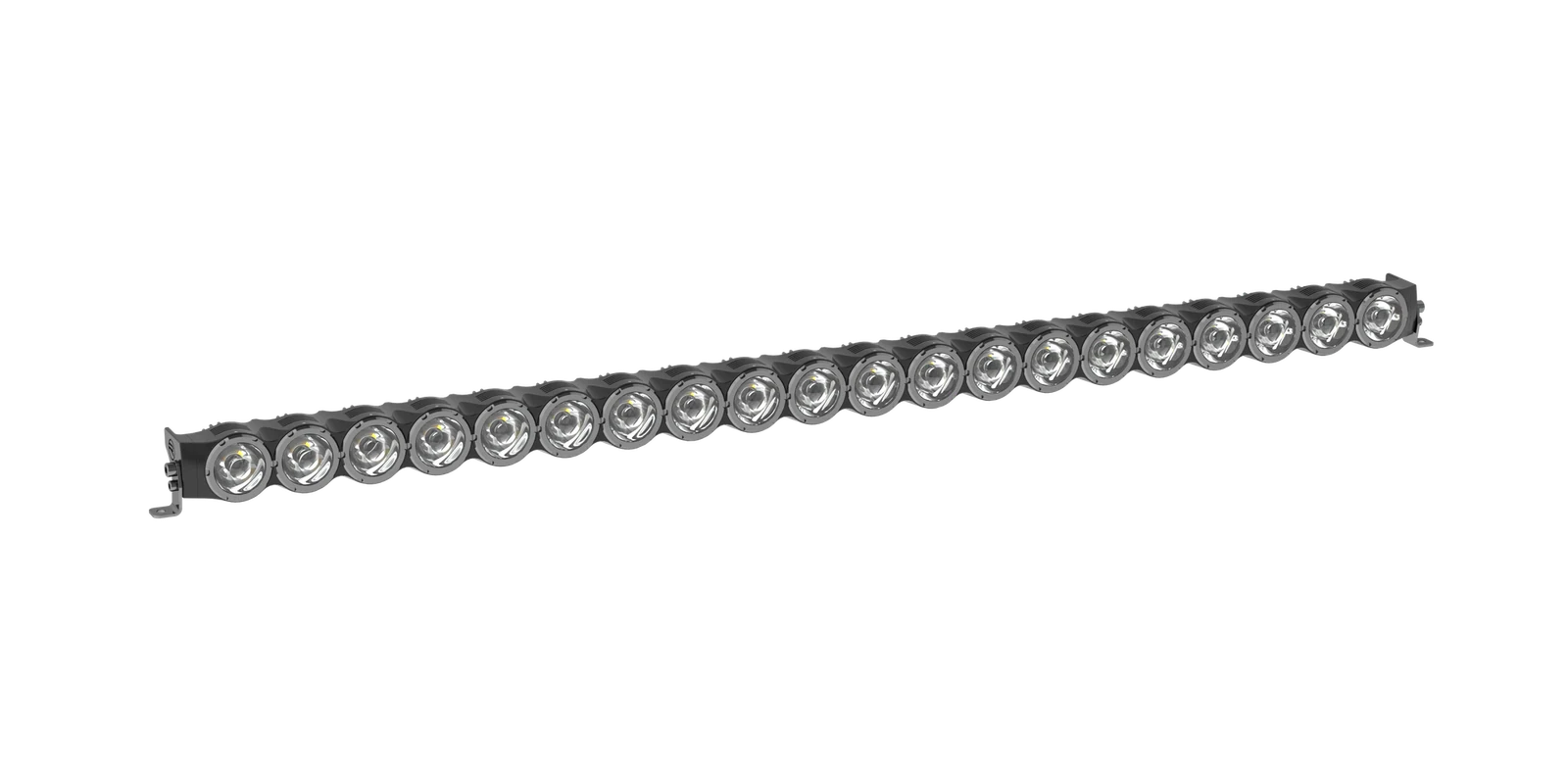
Zenith’s modular optics and individual channel control let you tune how its output is used. Power and current limits let you plan around the vehicle’s electrical budget. Those capabilities are worth considering alongside the published output.
Explore Zenith Technology ↗Technical references: NIST: luminous intensity and NIST: intensity and illuminance. Race specifications are identified separately on product pages.